Twenty-five services, two languages, and a digital size passport
A Dubai bespoke tailor with a 25-service catalogue in English and Arabic, UAE compliance pages written against the actual legislation, and stored customer measurements.
- Market
- United Arab Emirates
- Type
- Business site
- Delivered
- 2026
- Duration
- 10 weeks
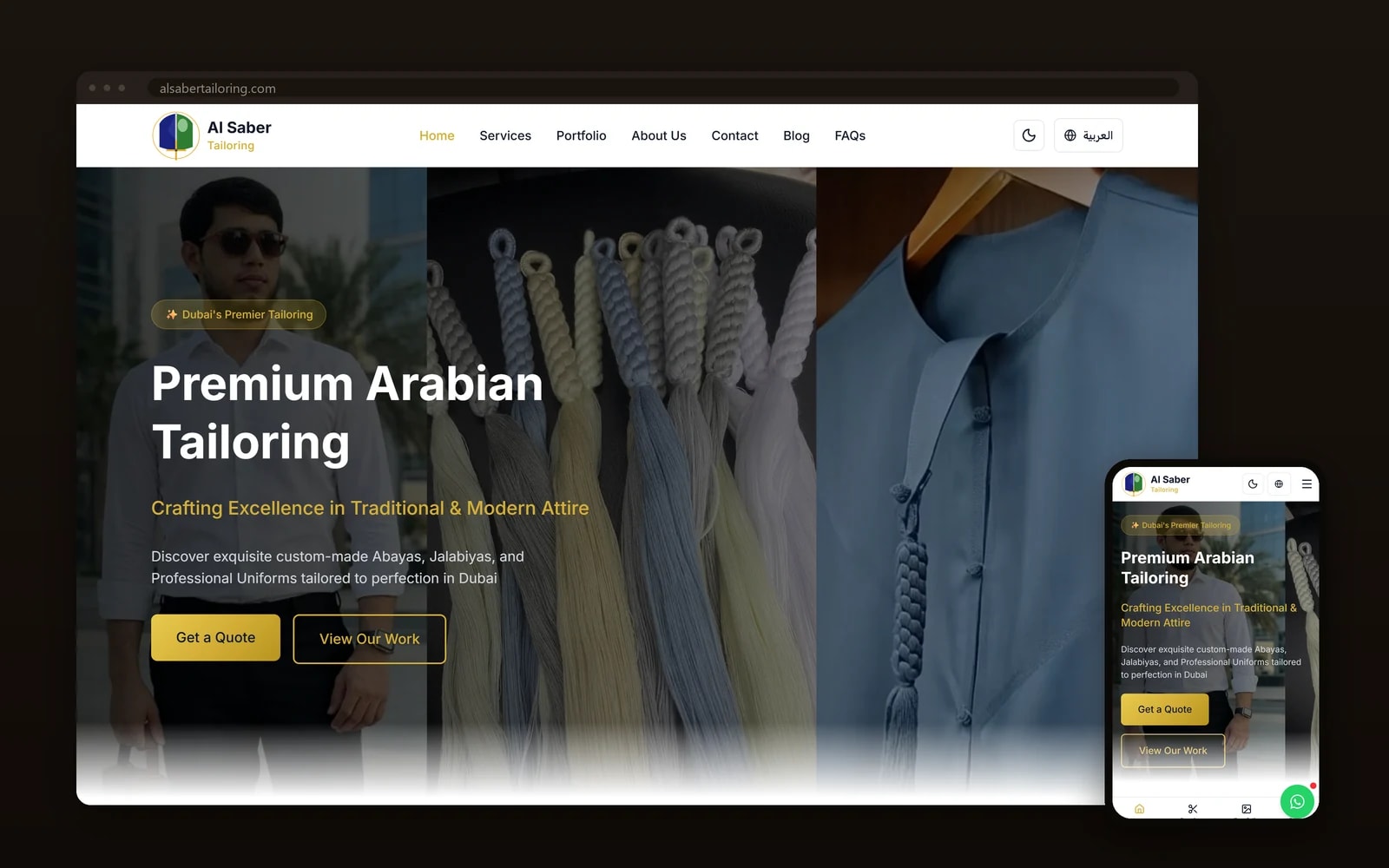
What it looks like


Measured results
Each figure records where it came from. Nothing here is an estimate or a round number chosen because it reads well.
The brief
Al Saber Tailoring makes bespoke suits, kanduras, abayas and corporate uniforms in Dubai. The catalogue is genuinely large — twenty-five distinct services across formalwear, traditional dress, uniforms, alterations and premium fabrics — which makes navigation, not visual design, the hard problem.
The differentiating feature is unglamorous and useful: customer measurements are stored and managed from the dashboard, so a returning customer does not get re-measured. For a tailor, that is the difference between a transaction and a relationship.
What was wrong
Twenty-five services is too many for a menu. Presented as a flat list, a visitor bounces before finding what they came for.
Bilingual with real right-to-left. Arabic is not a font swap; it changes layout direction, iconography and how a form reads.
UAE e-commerce carries specific legal obligations. Generic copied policy pages are worse than none — they claim compliance the business does not have.
Returning customers were being re-measured every time, because the measurements lived on paper.
What I did
Searchable, filterable catalogue rather than a menu, so twenty-five services is a strength instead of a wall.
Compliance pages written against the actual legislation — the UAE Personal Data Protection Law, the E-Commerce Law and the Consumer Protection Law — rather than adapted from a template written for another jurisdiction.
A digital size passport. Measurements captured once, stored against the customer, retrievable on the next order.
Structured data across five schema types, a sitemap that revalidates on a schedule, and hreflang pairing between the English and Arabic versions of every page.
WhatsApp-first conversion, because in this market that is where the customer actually wants to continue the conversation — the site's job is to get them there with context, not to trap them in a form.
Built with
Next.js 16 · TypeScript · MongoDB · Mongoose · NextAuth · Cloudinary · TipTap
More work
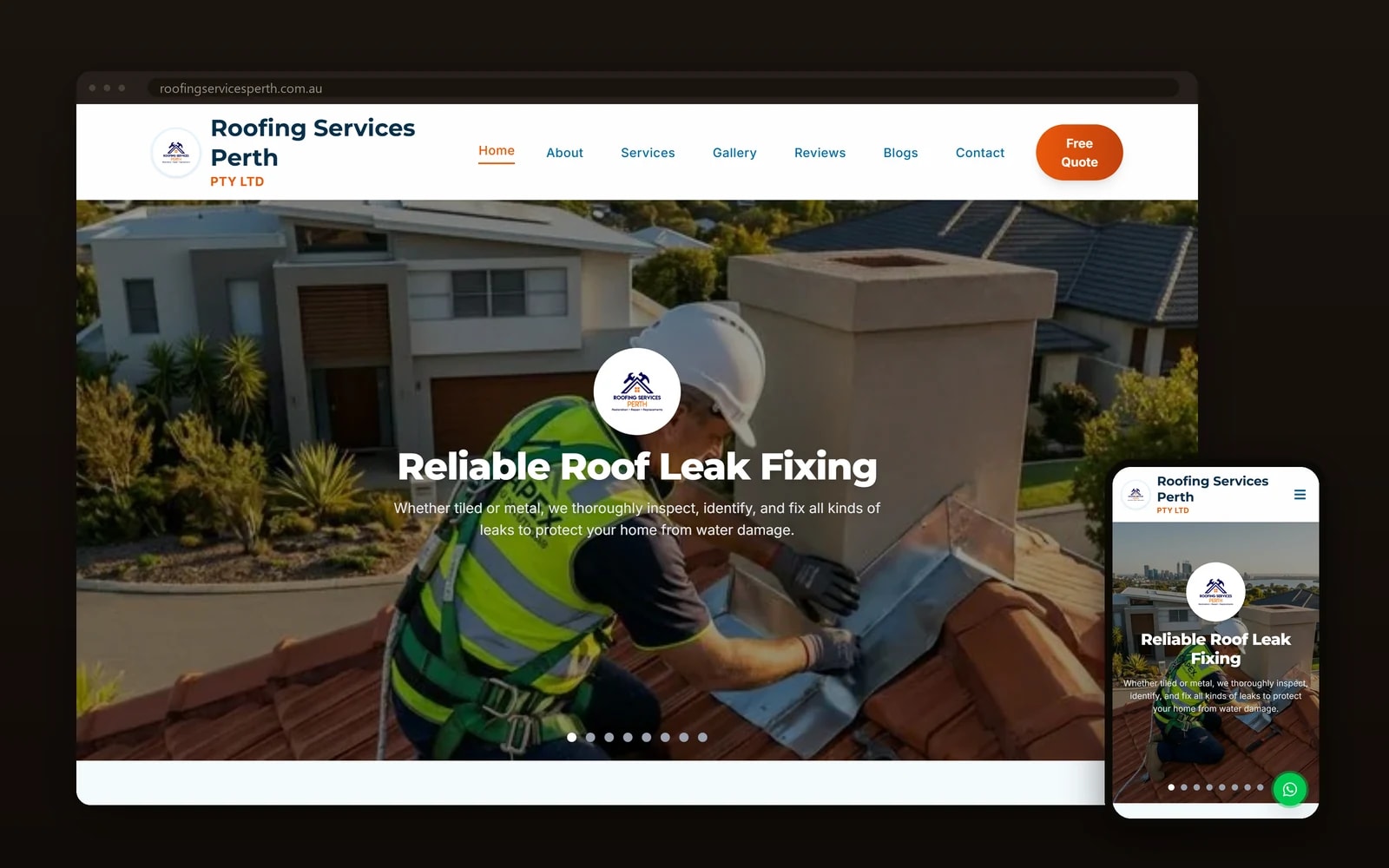
Cutting a roofing company’s page weight by two thirds
A Perth roofing business with a heavy single-page app that search engines could barely read. Rebuilt the delivery layer around prerendered HTML and cut the main JavaScript bundle by 68%.
−68% main JavaScript bundle
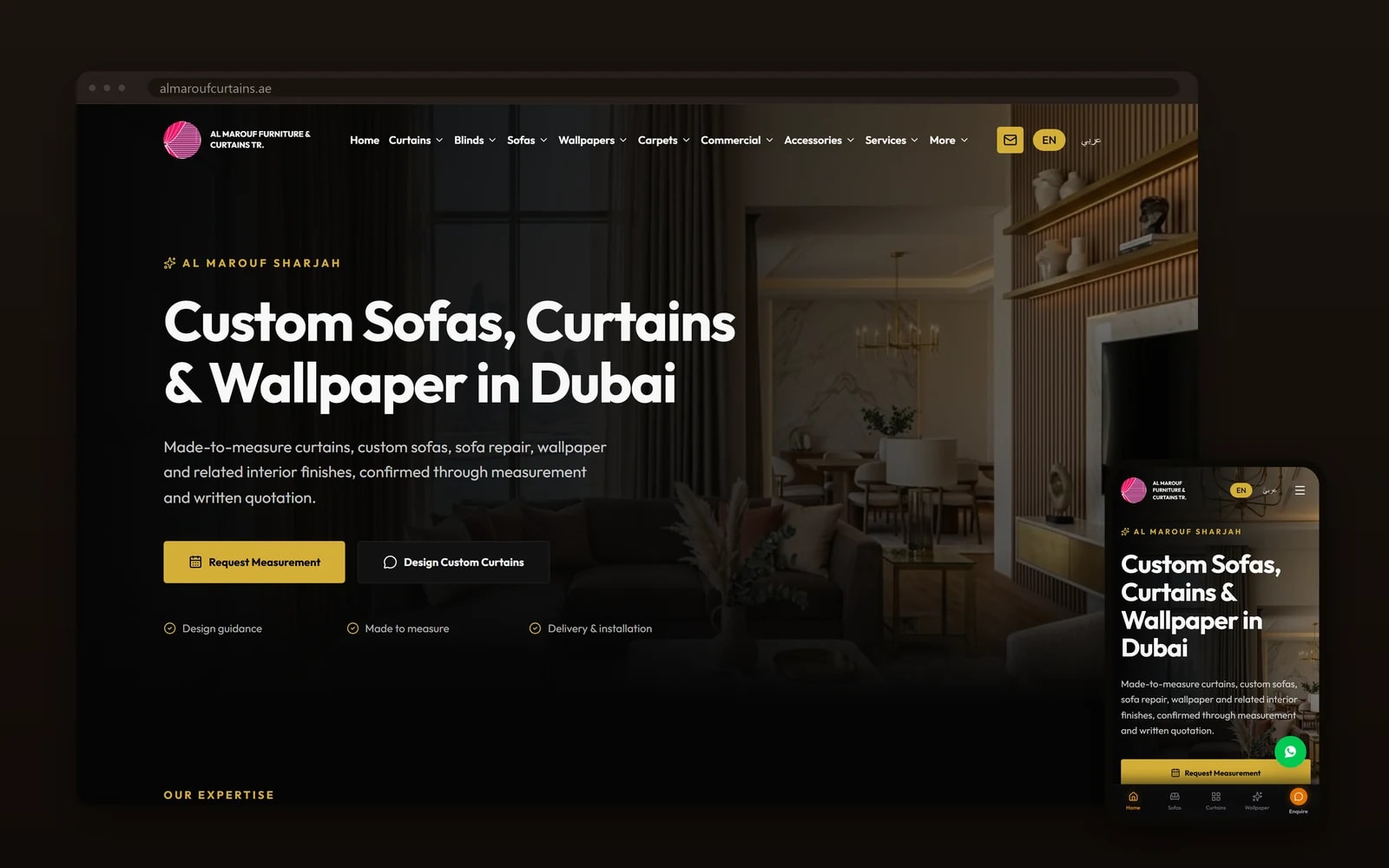
A storefront and an ERP in one bilingual system
A Dubai and Sharjah furnishing business running on WhatsApp threads and spreadsheets. Built one bilingual Next.js system that serves customers at the front and runs leads, quotations, orders and invoicing at the back.
1 REST endpoints in the entire application
Have something like this in mind?
A short call to work out what it would actually take. Free, and you get a written scope and price before anything is committed.